
Ascension by T30 · For the person rebuilding trust
A daily practice for rebuilding trust.
Ascension is for the person who broke trust. Use Check-ins, structured journals, Circle reviews, and Insights to record context, communicate proactively, and make follow-through visible over time.
See the complete Ascension system.
Start with the full journal path, then open any feature for its workflow, screenshots, and recovery use.
Ascension feature path
Journals & Circles
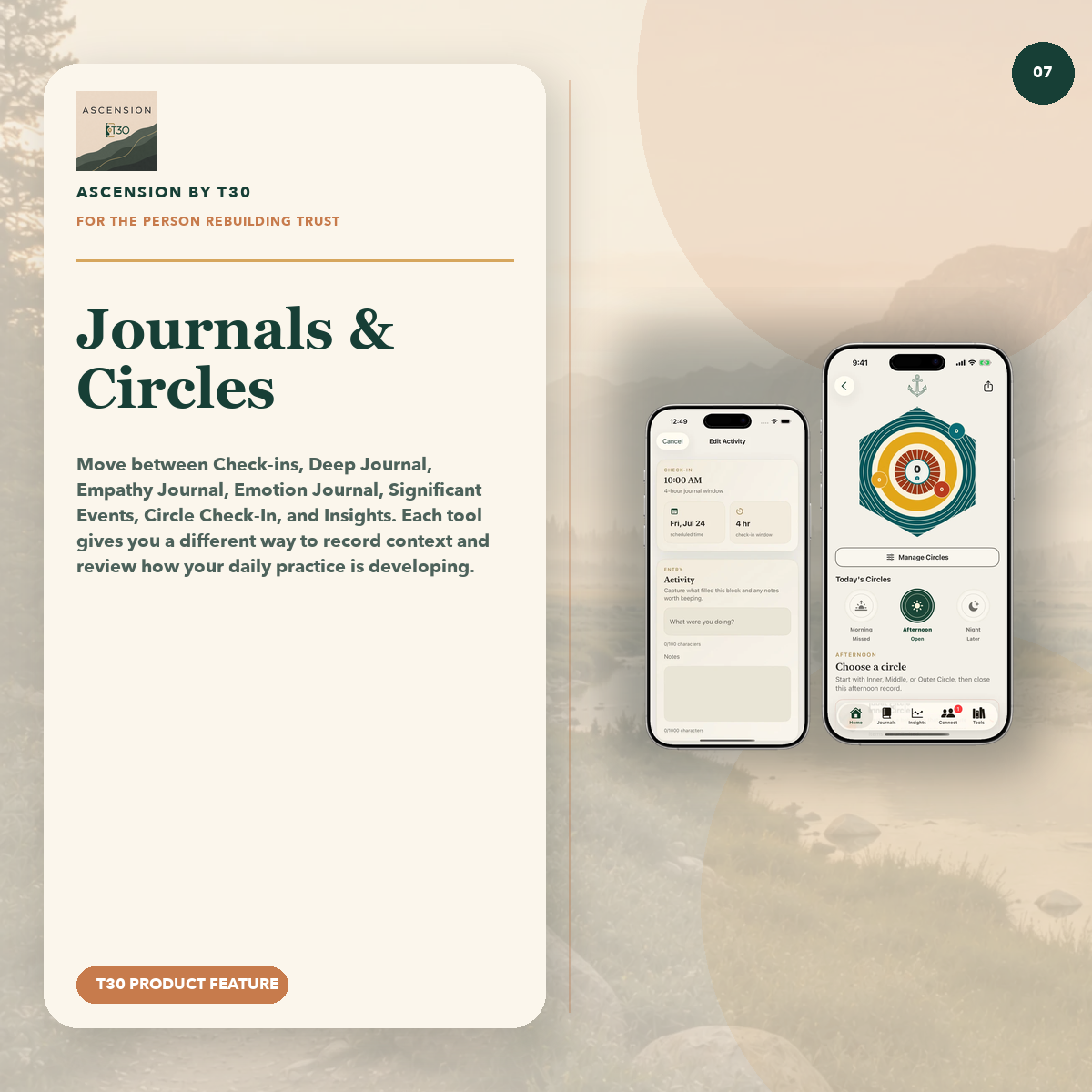
Move between Check-ins, Deep Journal, Empathy Journal, Emotion Journal, Significant Events, Circle Check-In, and Insights. Each tool gives you a different way to record context and review how your daily practice is developing.
Explore the journal pathJournal types in Ascension
Choose the format that fits the moment: a frequent micro-journal, long-form reflection, emotion processing, empathy work, an event record, or a Circle review.
Proactive communication
Check-In Journal
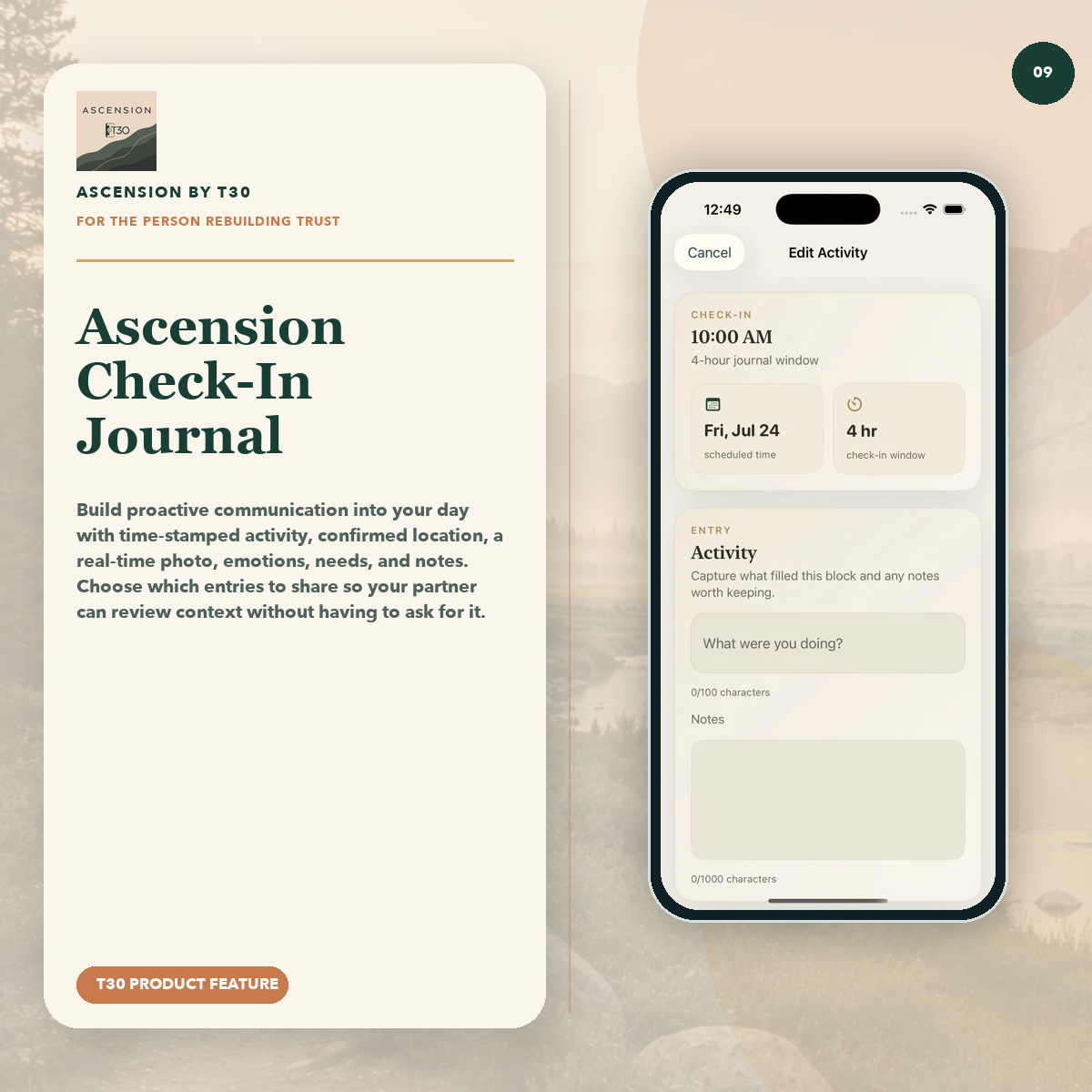
Use frequent micro-journals to record activity, a location verified at check-in, a camera-captured photo, emotions, needs, and what is on your mind. Share selected entries to Anchored or by text so your partner receives context before having to ask.
Explore Check-In Journal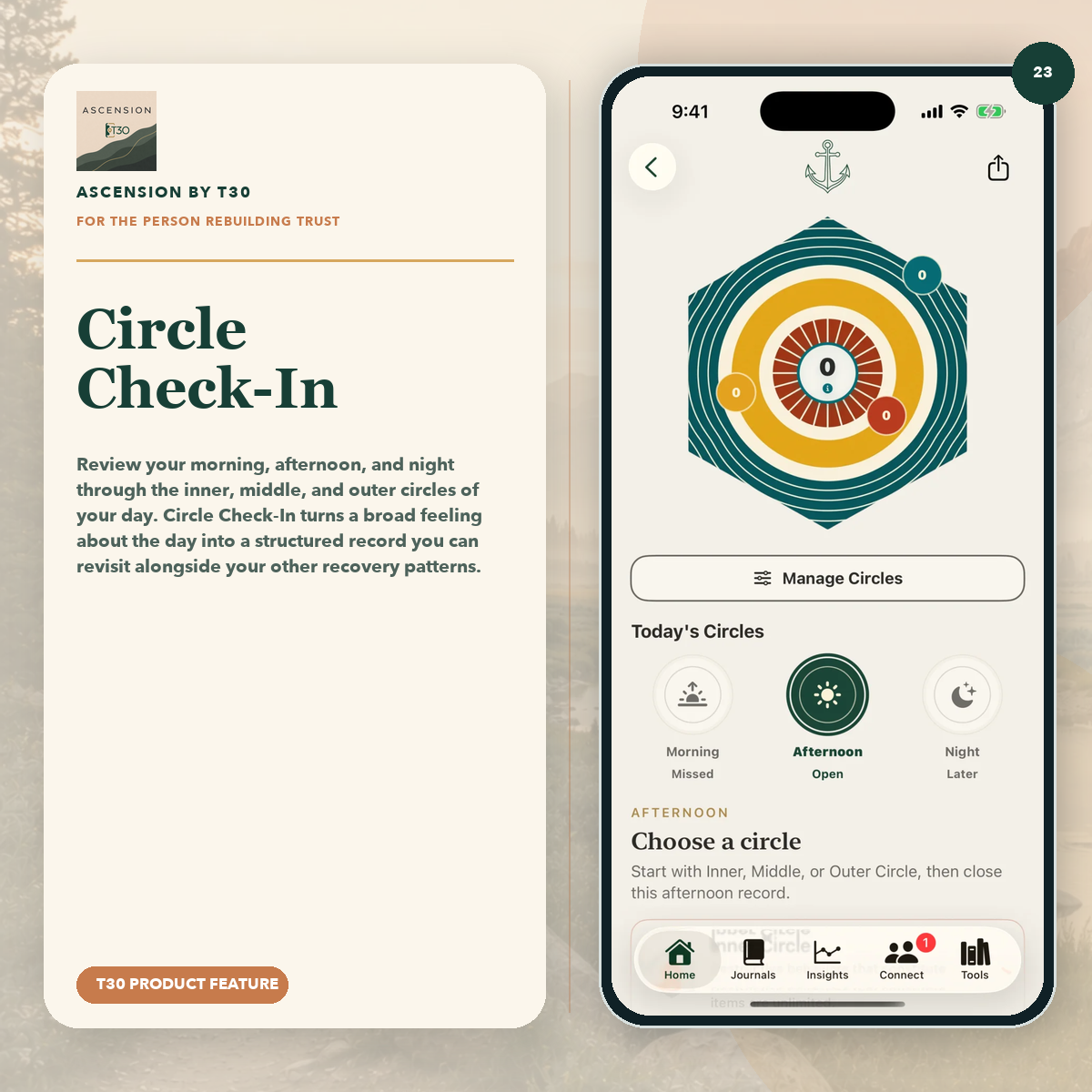
Morning · Afternoon · Night
Circle Check-In
Review your morning, afternoon, and night by placing behavior in the Inner, Middle, or Outer Circle. Separate relapse behavior, warning signs, and choices that support recovery, then revisit how the day moved toward risk or recovery.
Explore Circle Check-In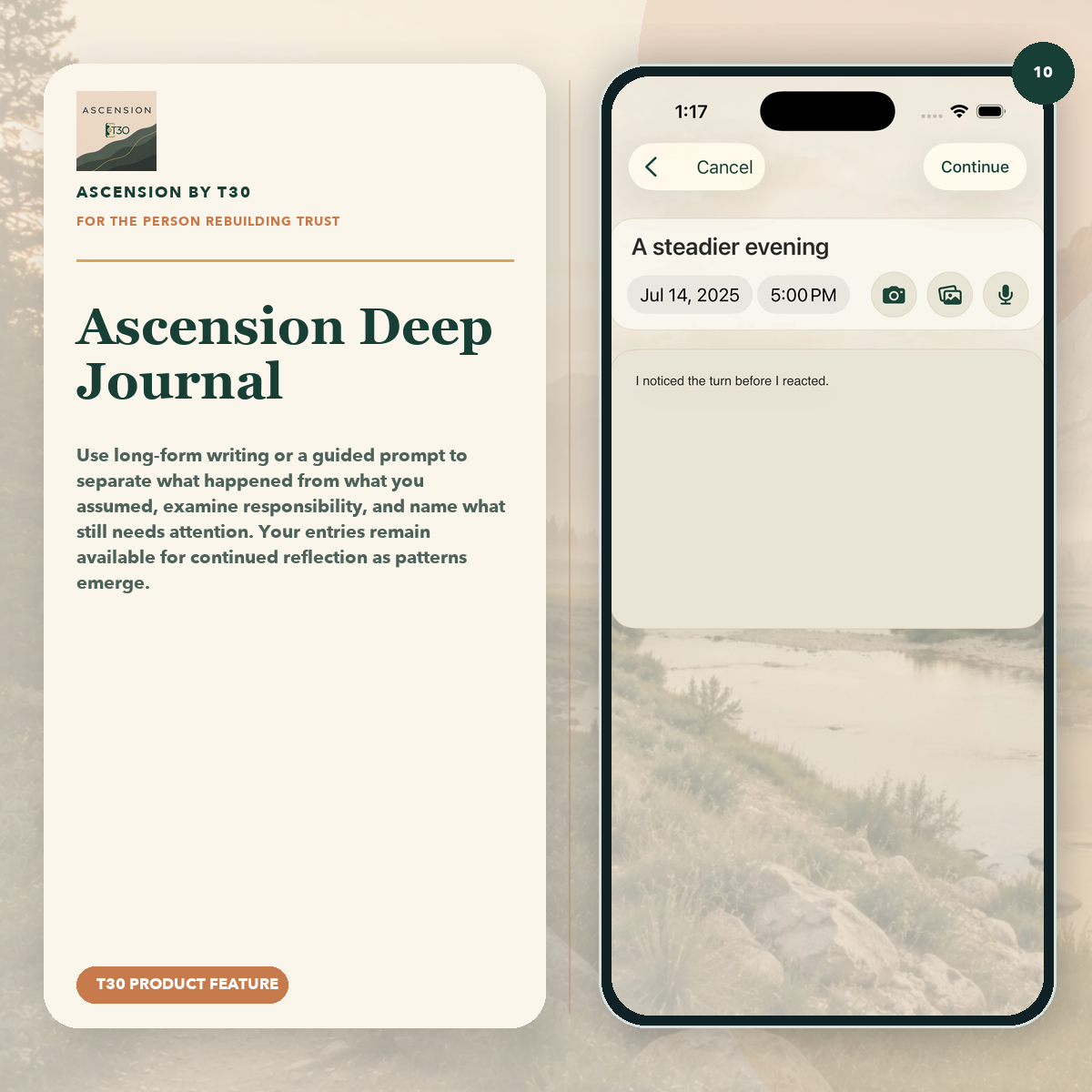
Long-form reflection
Deep Journal
Use long-form writing or a guided prompt to separate what happened from what you assumed, examine responsibility, and name what still needs attention. Your entries remain available for continued reflection as patterns emerge.
Explore Deep Journal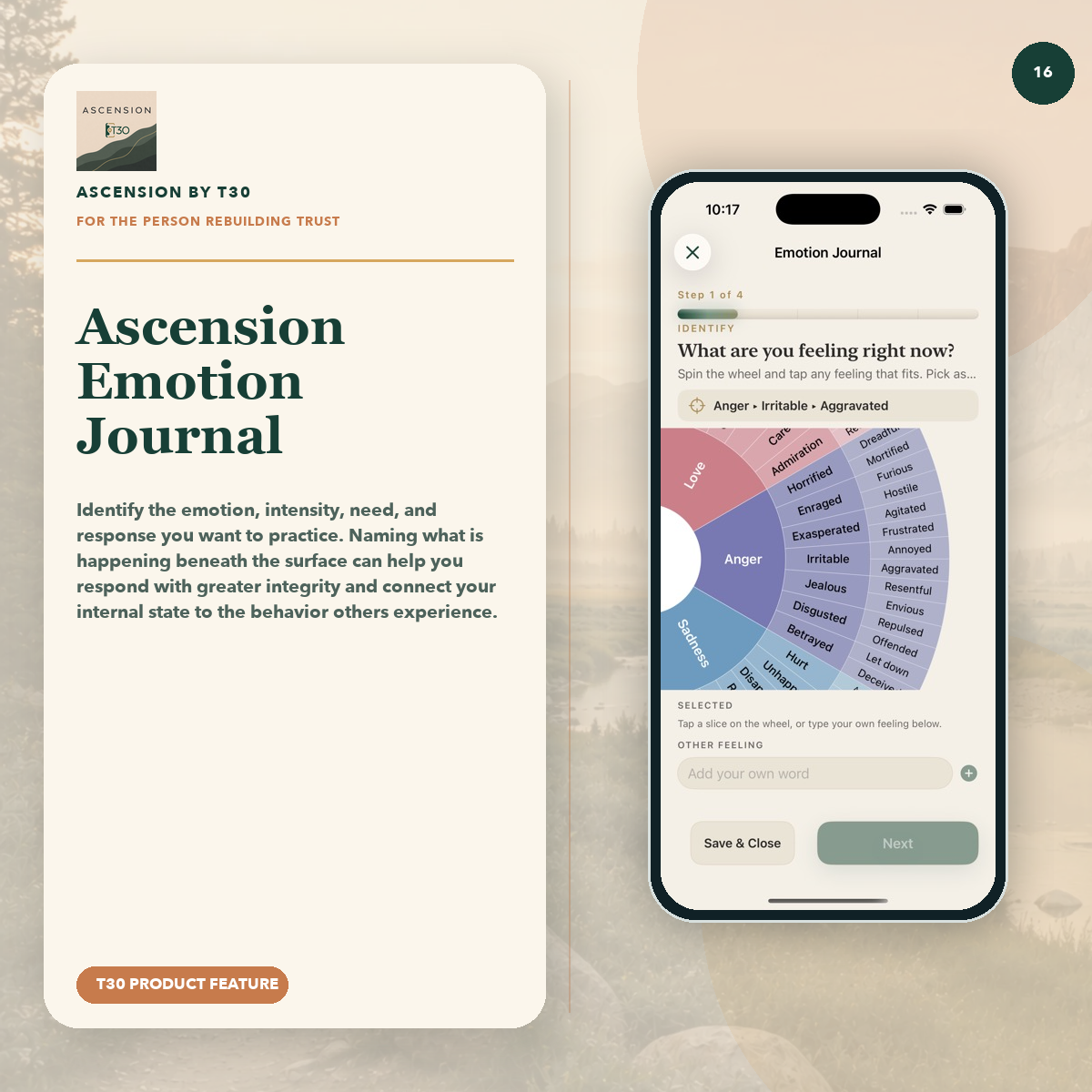
Emotion · Intensity · Need
Emotion Journal
Identify the emotion, intensity, need, and response you want to practice. Naming what is happening beneath the surface can help you respond with greater integrity and connect your internal state to the behavior others experience.
Explore Emotion Journal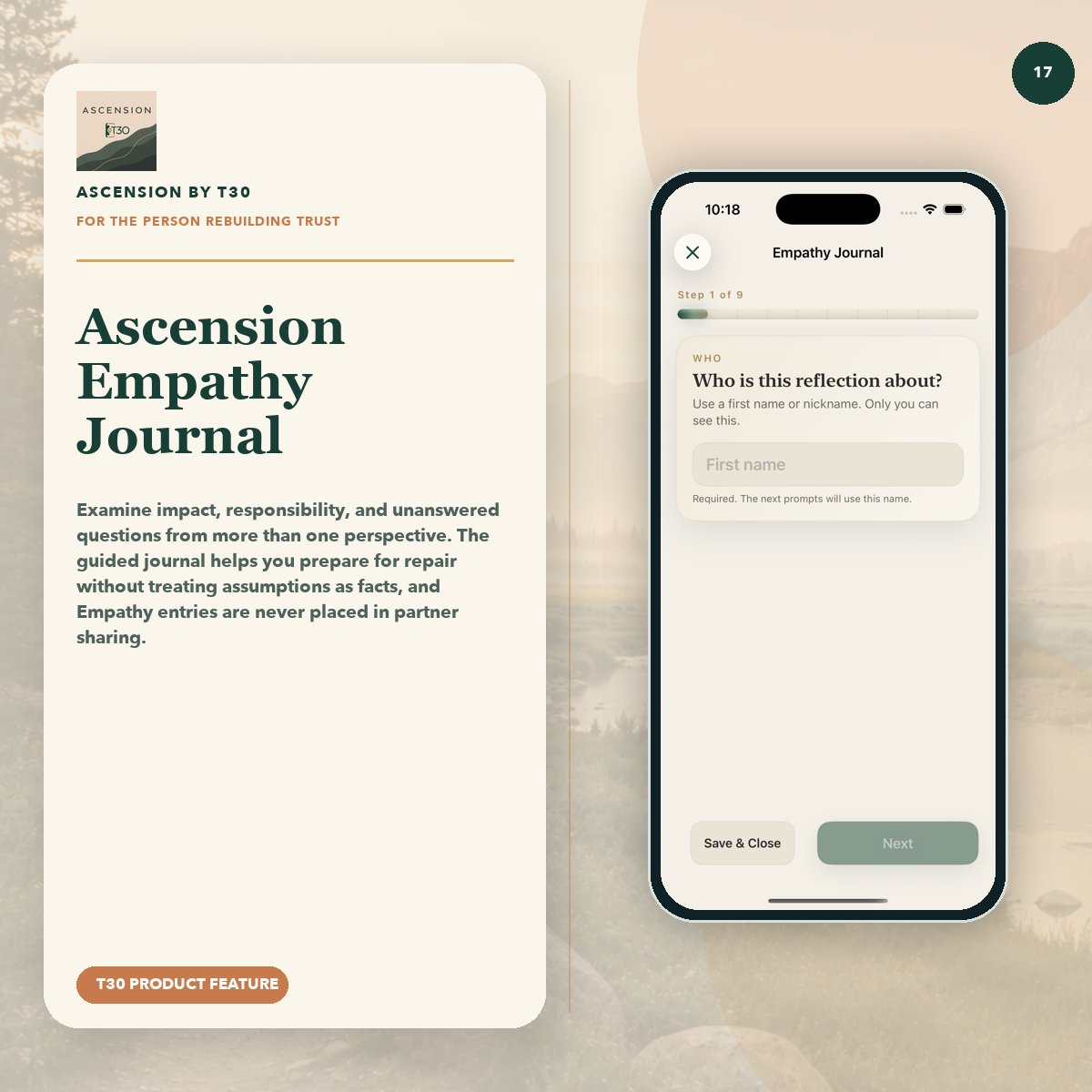
Impact · Responsibility · Repair
Empathy Journal
Name a person and situation, identify your feelings, examine your contribution, and consider how the other person may feel. Then name your response to their experience and define the next right step. Empathy entries are never placed in partner sharing.
Explore Empathy Journal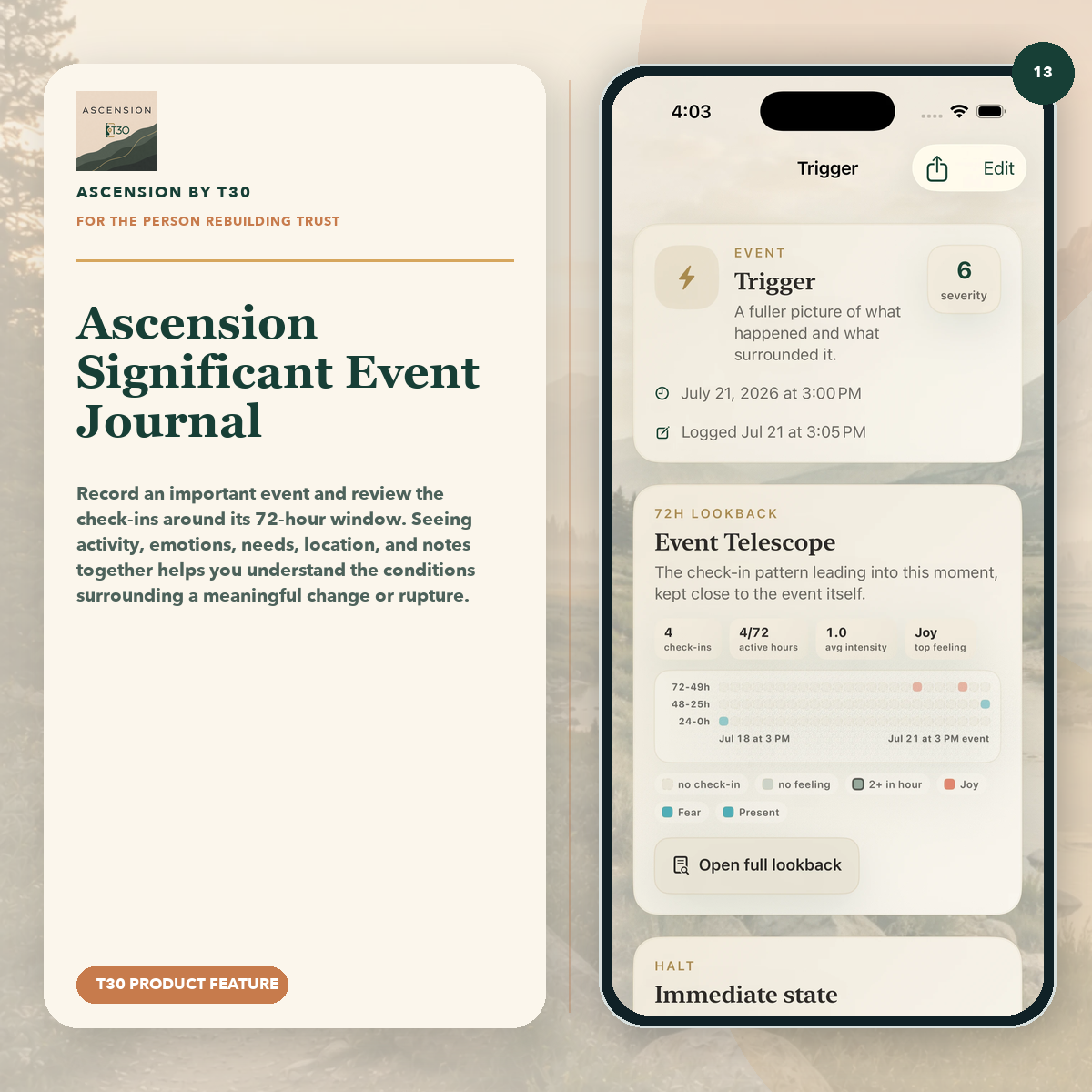
72-hour context
Significant Event Journal
Process a win, challenge, relapse, or breakthrough through structured questions. Significant Event Journal joins the event with your previous 72 hours of Check-ins in one record so you can review what led to the moment.
Explore Significant EventsTools that keep the practice connected
Review patterns, share confirmed context, involve an accountability partner, and reuse the structures that make proactive communication easier to sustain.
For the person rebuilding trust
Insights
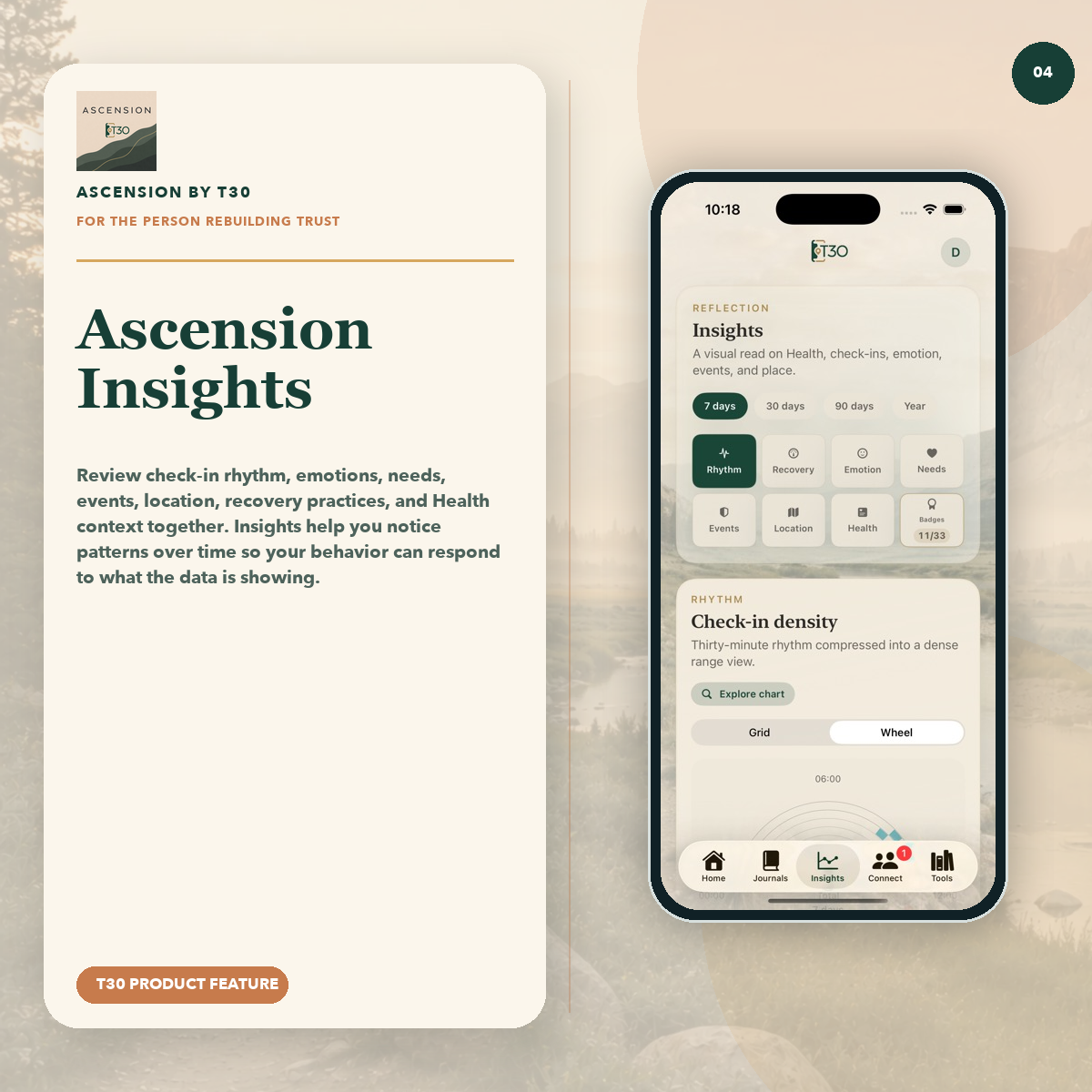
Review check-in rhythm, emotions, needs, events, location, recovery practices, and Health context together. Insights help you notice patterns over time so your behavior can respond to what the data is showing.
Explore Insights
Confirmed context
Location & Drop-Ins
Share a confirmed location, live context, photo, activity, and selected thoughts before your partner has to ask. Proactive check-ins replace uncertainty with concrete information they can review in their own Anchored feed.
Explore Location & Drop-Ins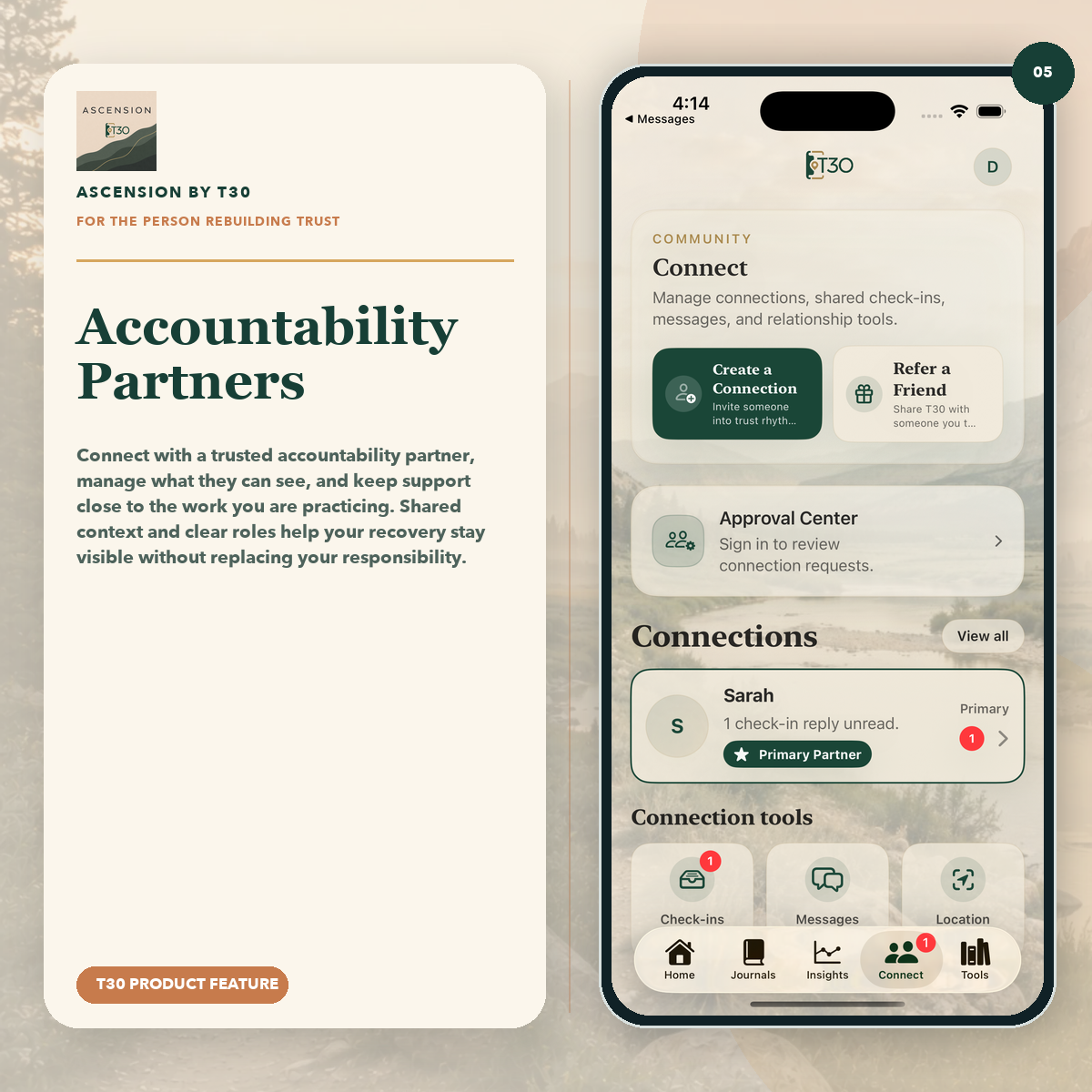
Support with clear roles
Accountability Partners
Connect with a trusted accountability partner, manage what they can see, and keep support close to the work you are practicing. Shared context and clear roles help your recovery stay visible without replacing your responsibility.
Explore Accountability
Theme · Icon · App-wide artwork
Own Your Journal
Use Theme Studio to choose a complete palette, fine-tune interface colors, control the nature backdrop, and select the Home Screen icon and optional app-wide artwork.
Explore Theme Studio