Anchored by T30 · For the person whose trust was broken
Make space for your experience.
Process thoughts and feelings, clarify what you need, build boundaries, and review shared context in a separate workspace that keeps your experience centered.
A separate connected workspace
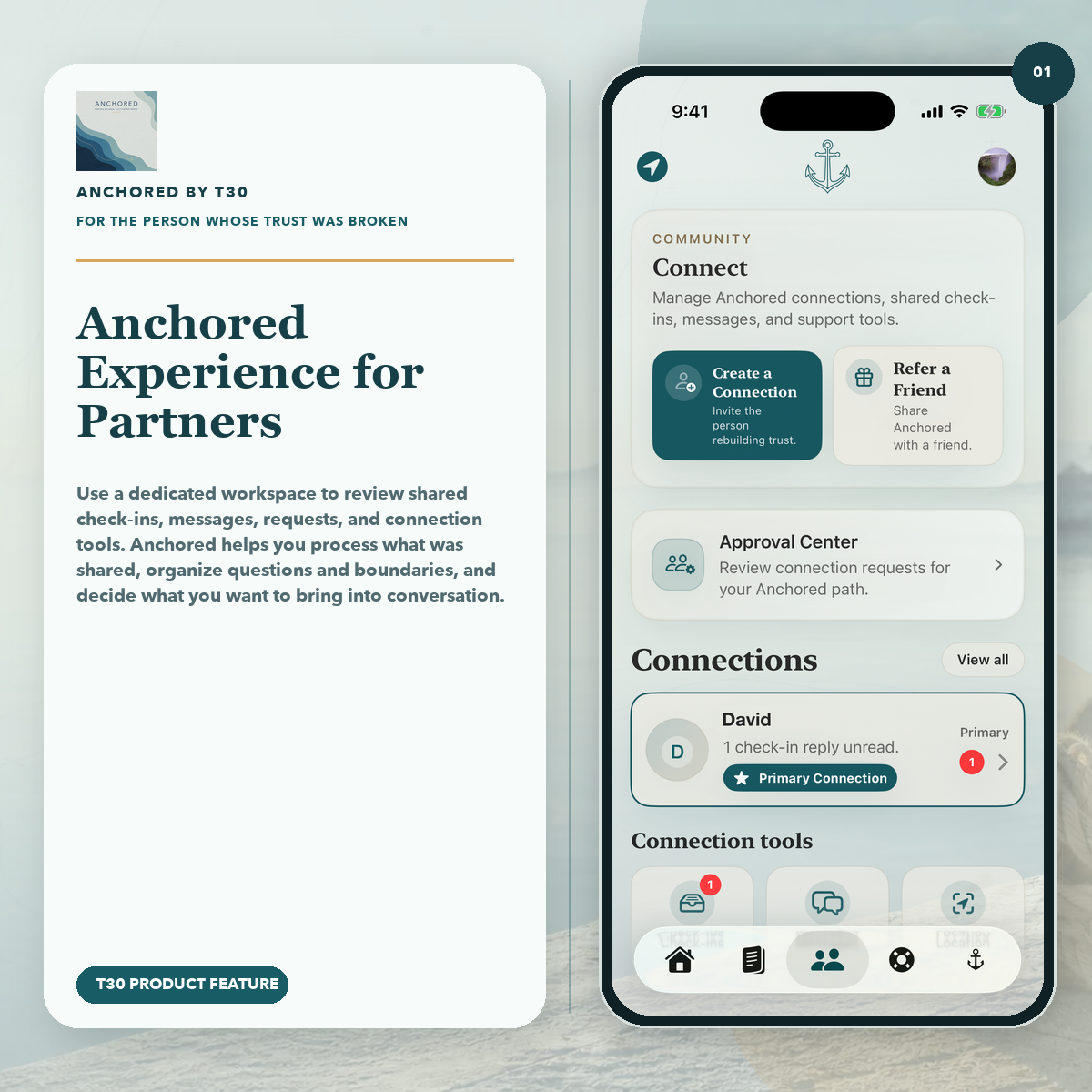
Anchored Experience
Use a dedicated workspace to review shared check-ins, messages, requests, and connection tools. Anchored helps you process what was shared, organize questions and boundaries, and decide what you want to bring into conversation.
Explore Anchored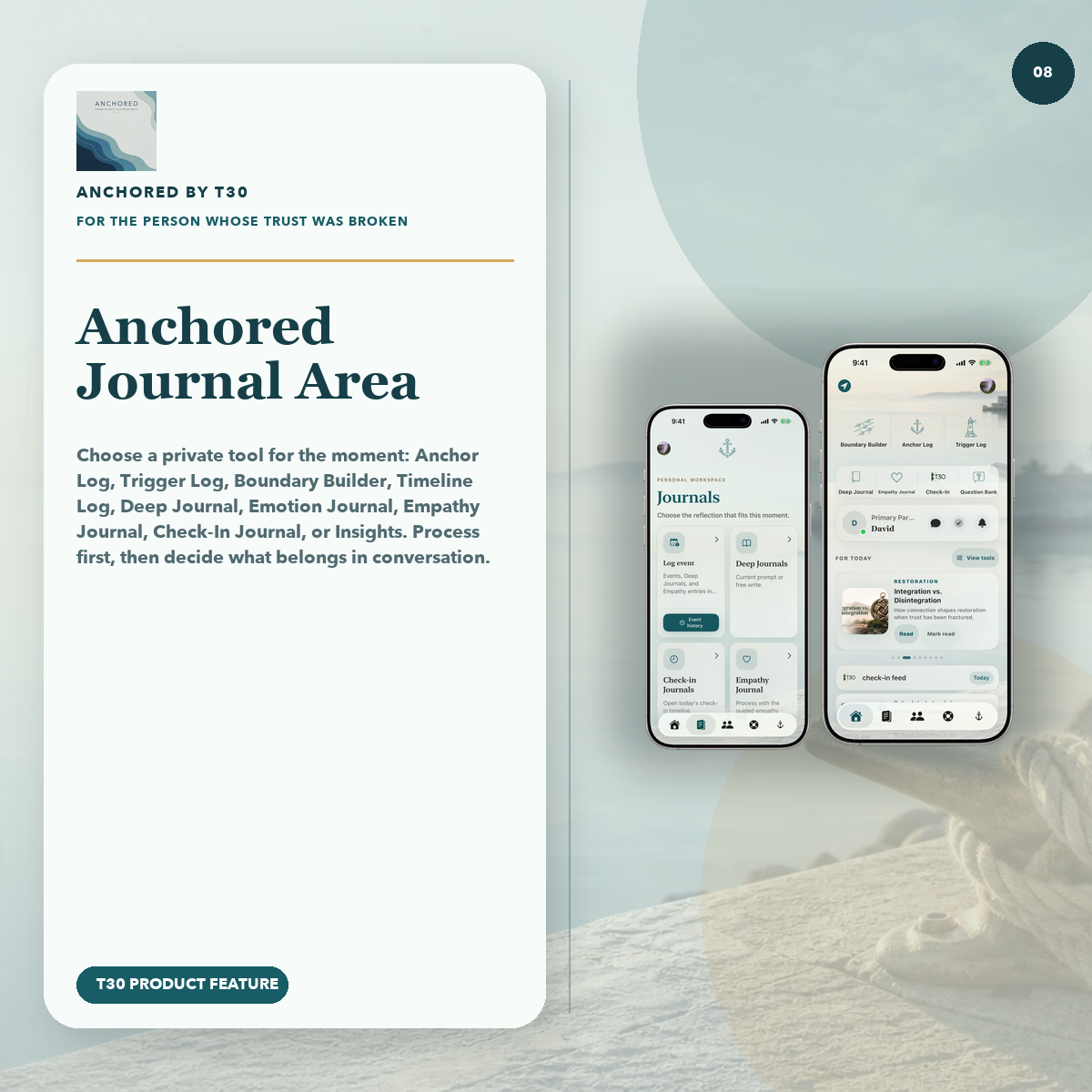
Tools for the moment
Anchored Journal Area
Choose Anchor Log, Trigger Log, Boundary Builder, Timeline Log, Deep Journal, Emotion Journal, Empathy Journal, Check-In Journal, or Insights. Process first, then decide what belongs in conversation.
Explore the journal path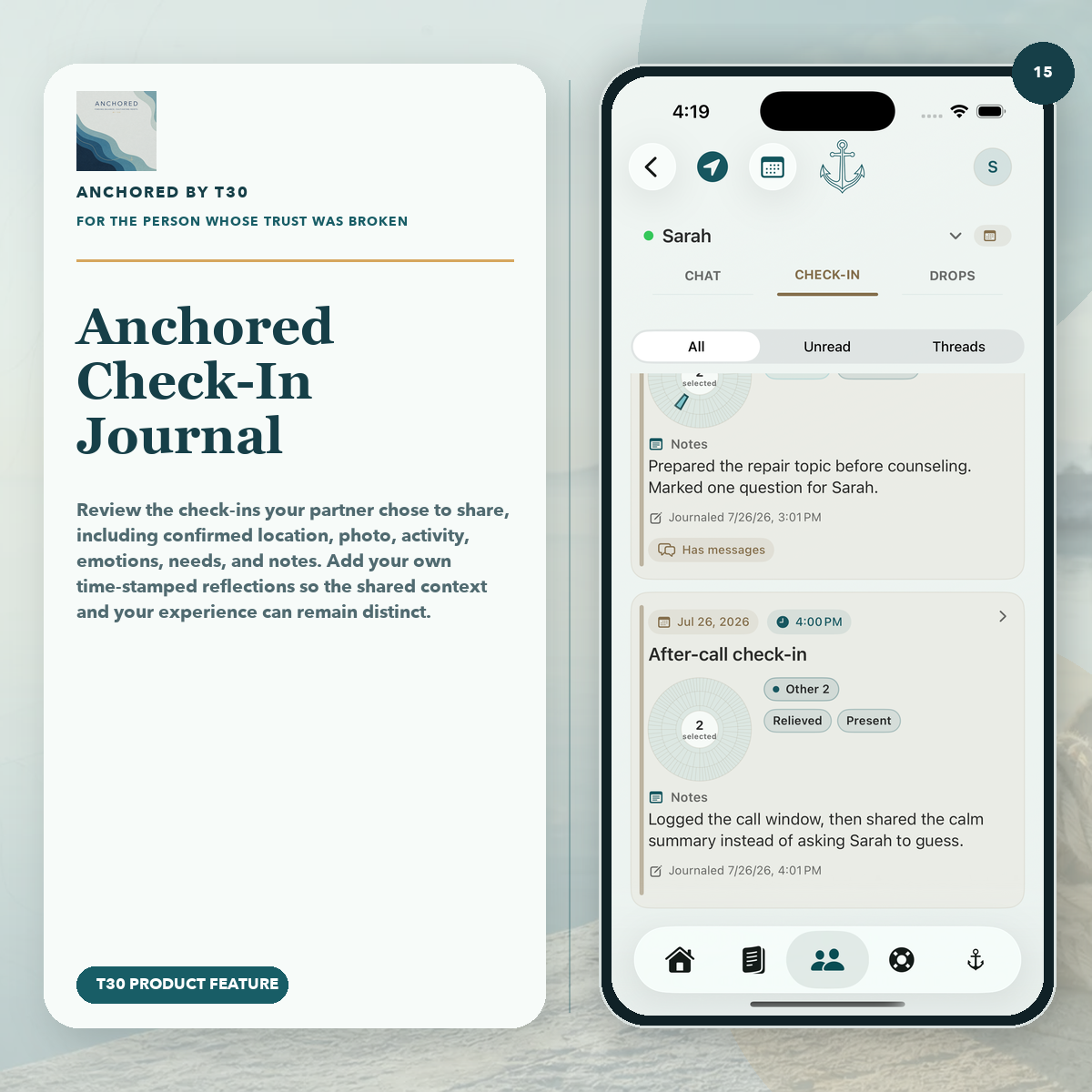
Shared context · Your response
Check-In Journal
Review the Check-ins your partner chose to share, including verified-at-check-in location, a camera-captured photo, activity, emotions, needs, and notes. Add your own time-stamped reflections so their context and your experience remain distinct.
Explore Check-In Journal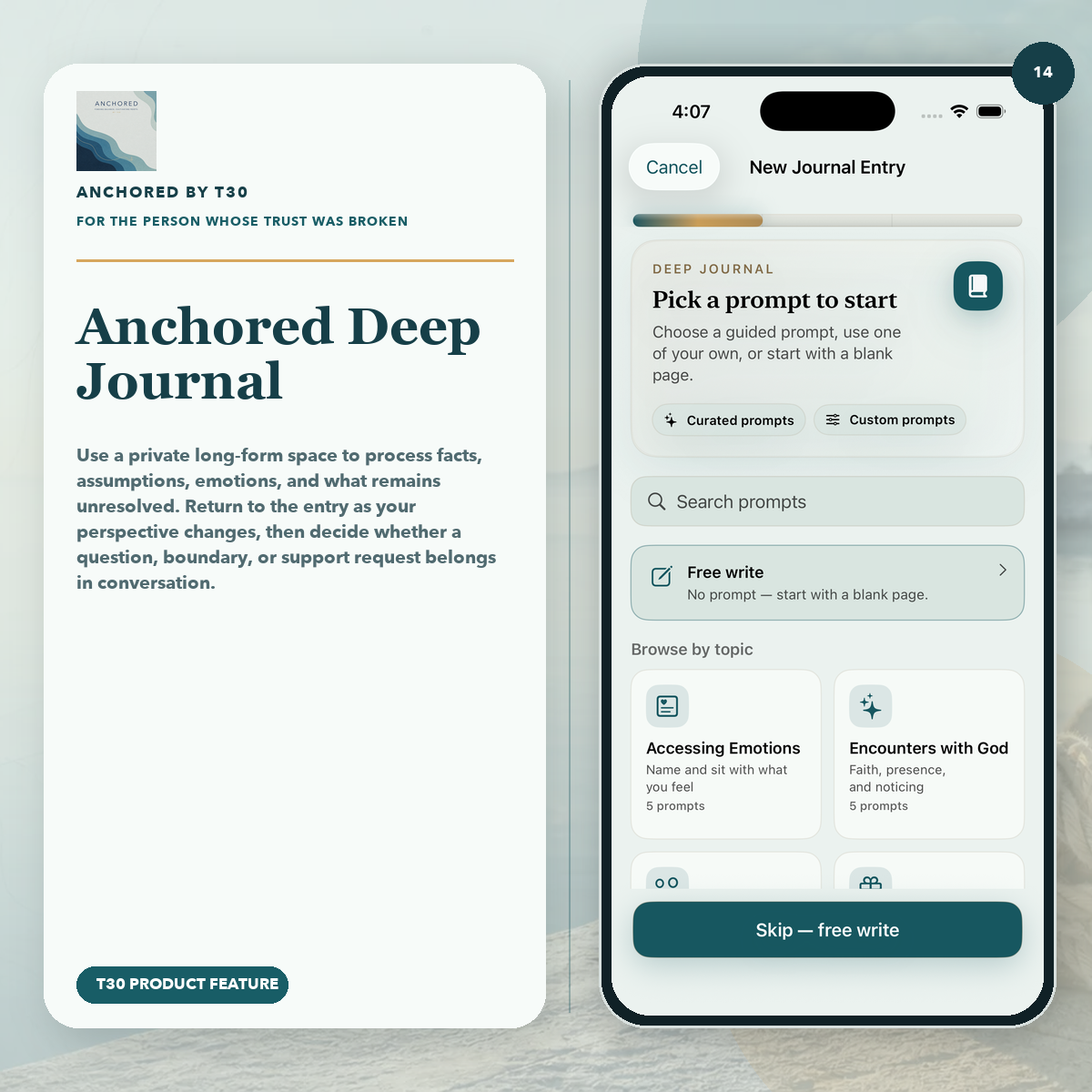
Long-form processing
Deep Journal
Use a long-form space to process facts, assumptions, emotions, and what remains unresolved. Return to the entry as your perspective changes, then decide whether a question, boundary, or support request belongs in conversation.
Explore Deep Journal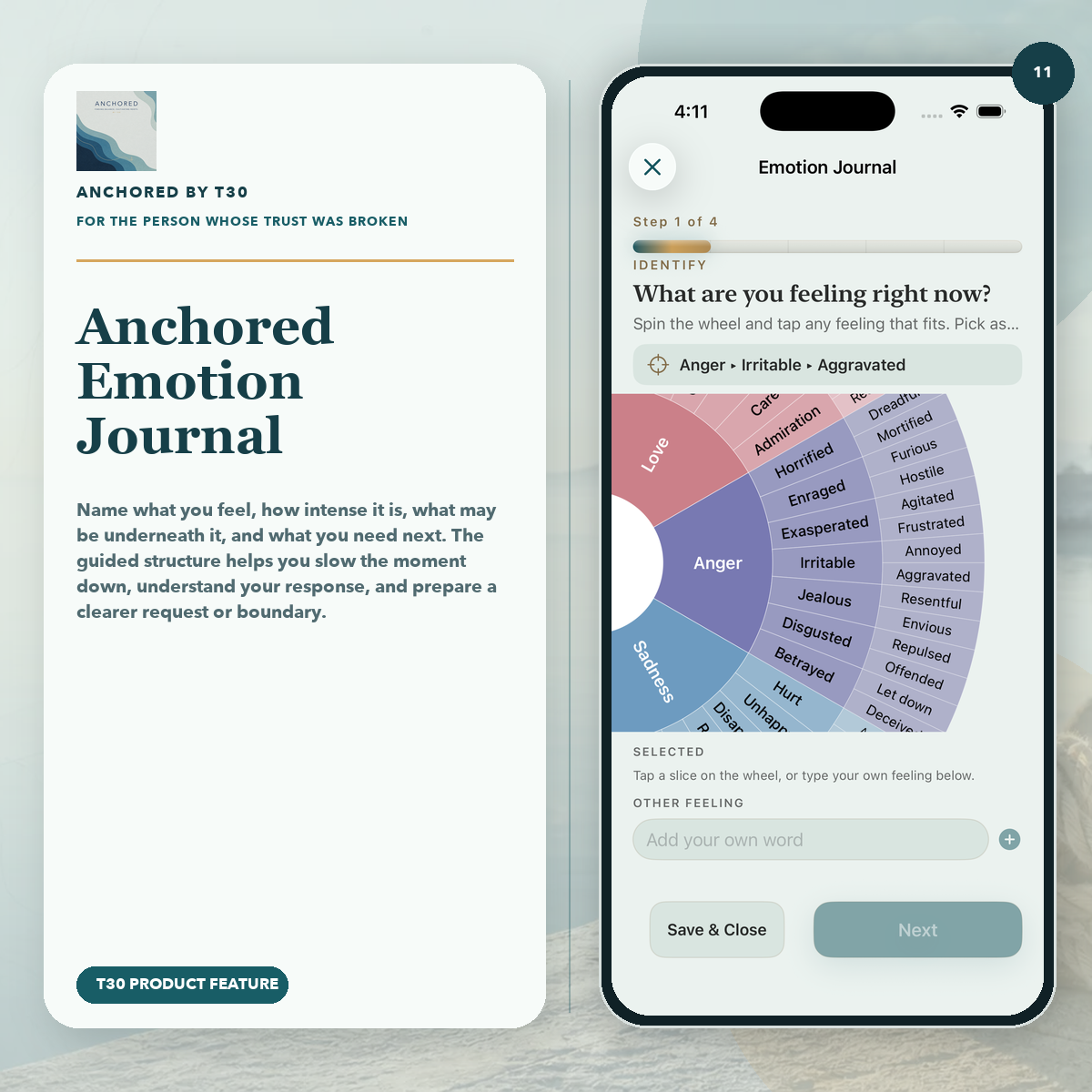
Emotion · Intensity · Need
Emotion Journal
Name what you feel, how intense it is, what may be underneath it, and what you need next. The guided structure helps you slow the moment down, understand your response, and prepare a clearer request or boundary.
Explore Emotion Journal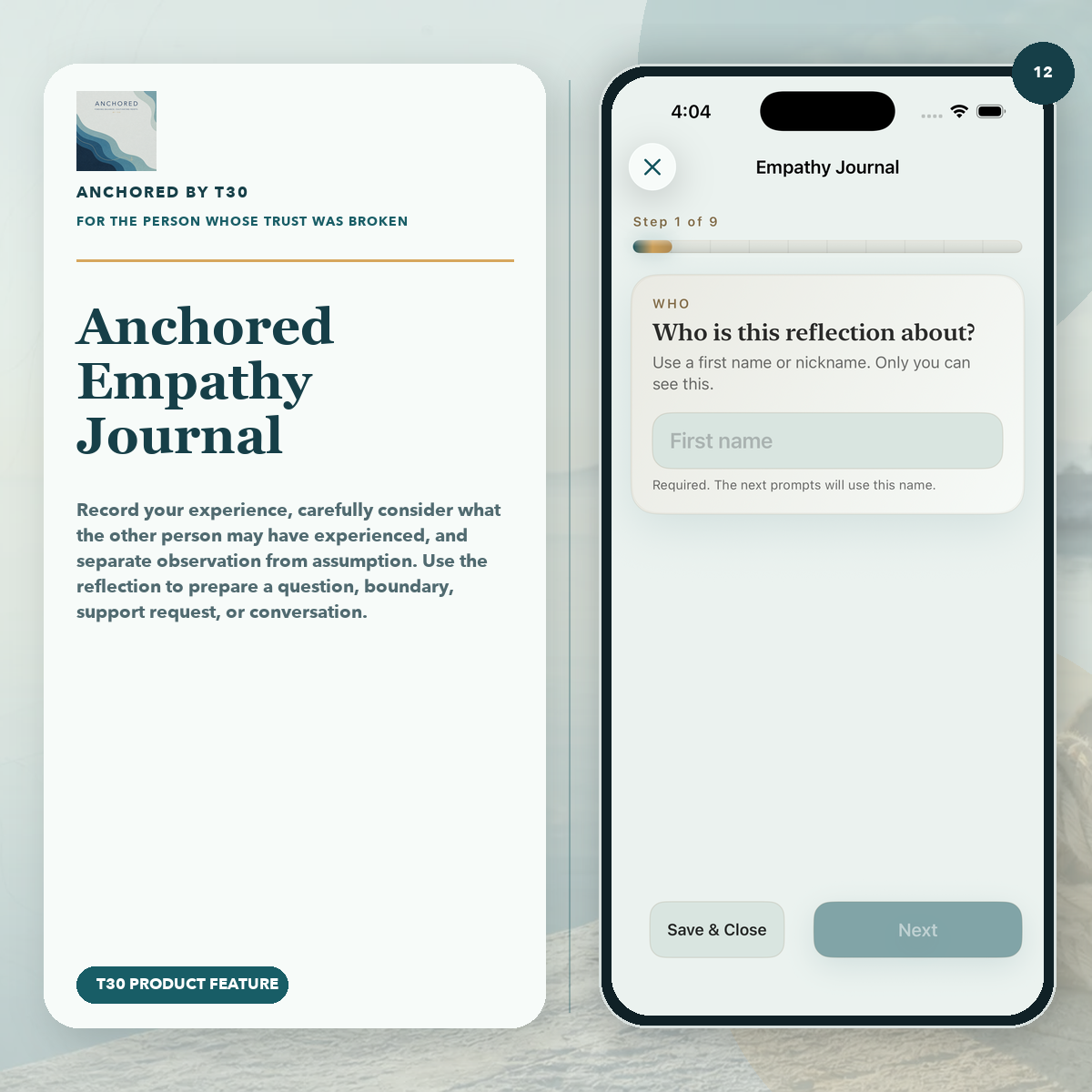
Observation · Impact · Assumption
Empathy Journal
Record your experience, carefully consider what the other person may have experienced, and separate observation from assumption. Use the reflection to prepare a question, boundary, support request, or conversation.
Explore Empathy Journal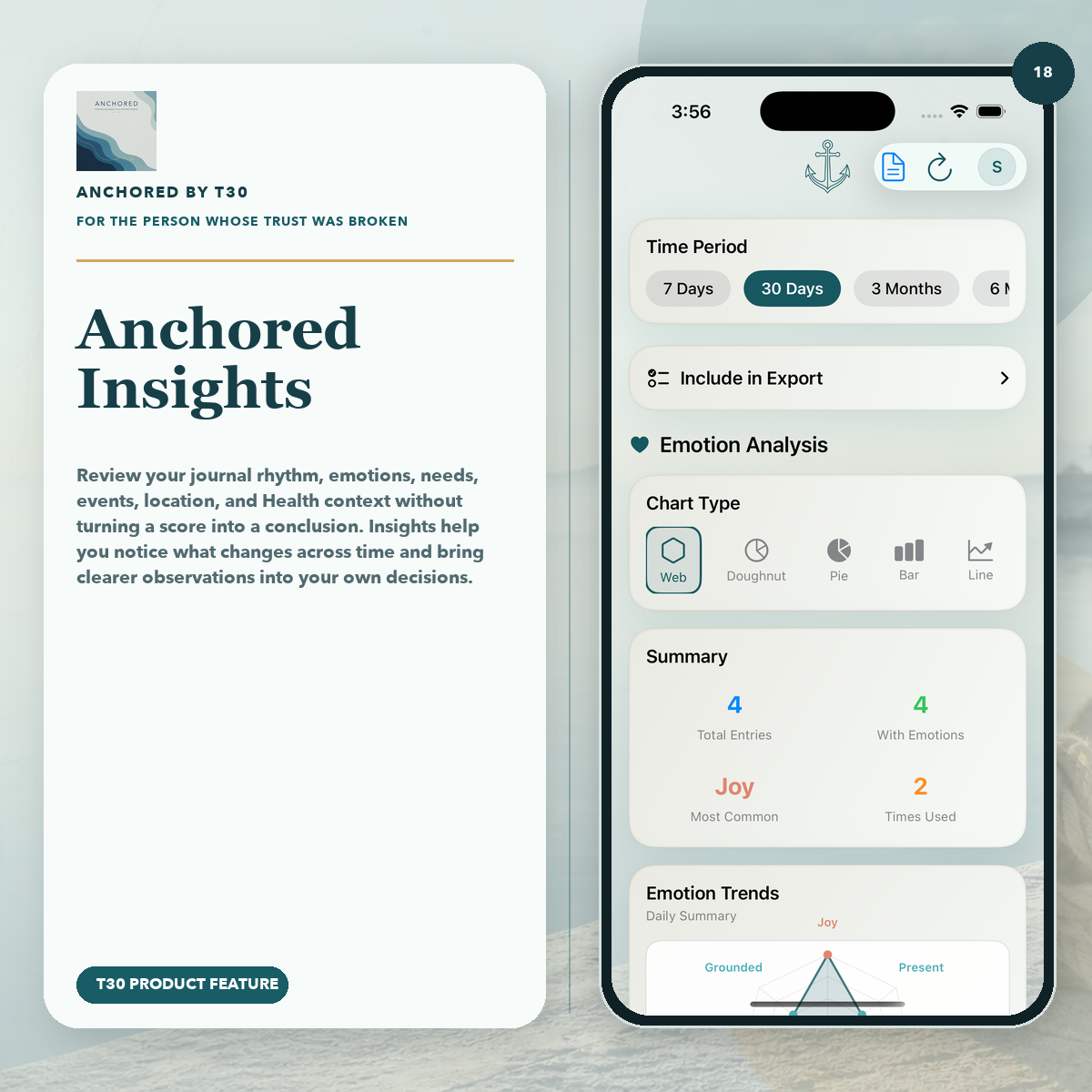
For the person whose trust was broken
Insights
Review your journal rhythm, emotions, needs, events, location, and Health context without turning a score into a conclusion. Insights help you notice what changes across time and bring clearer observations into your own decisions.
Explore Insights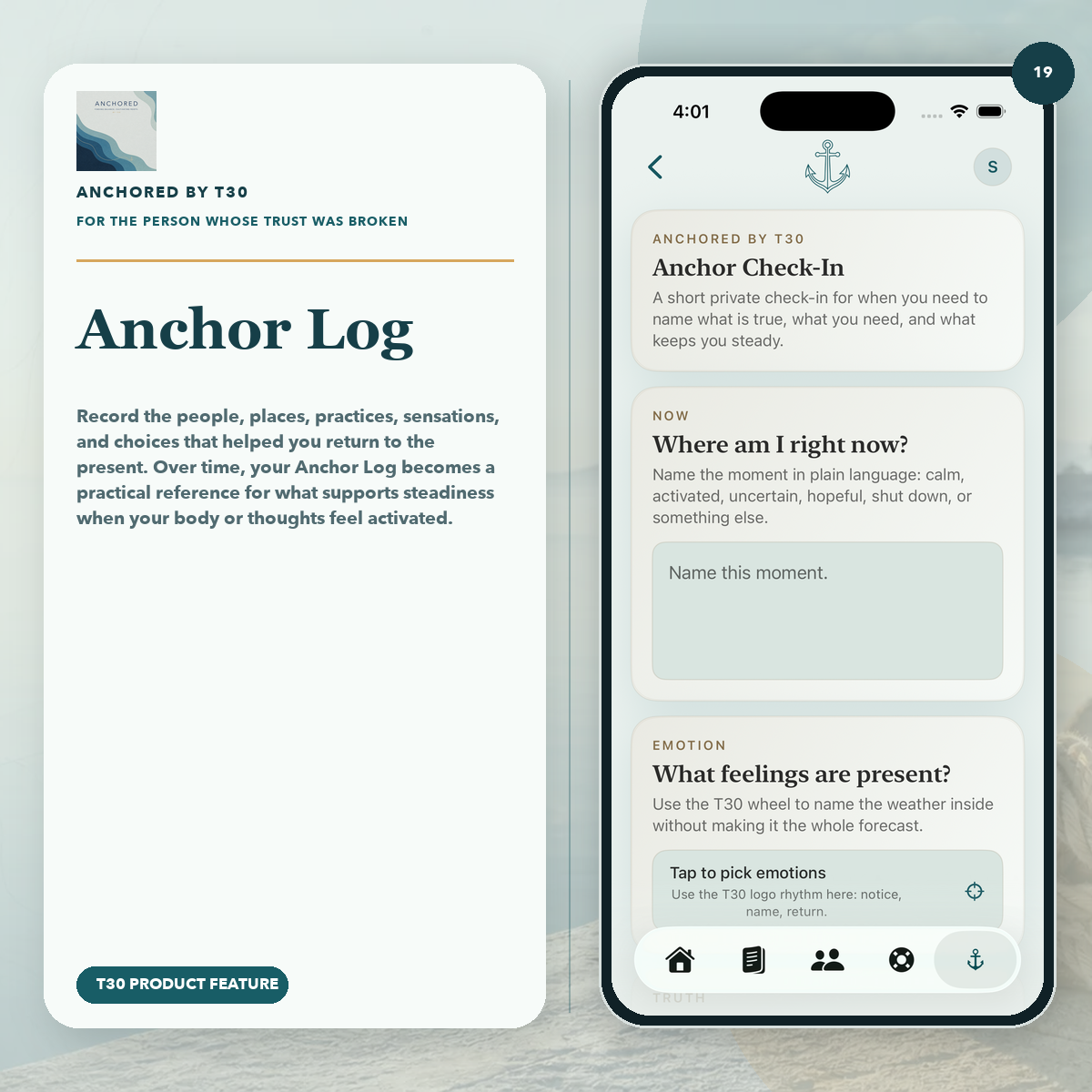
Return to the present
Anchor Log
Record the people, places, practices, sensations, and choices that helped you return to the present. Over time, your Anchor Log becomes a practical reference for what supports steadiness when your body or thoughts feel activated.
Explore Anchor Log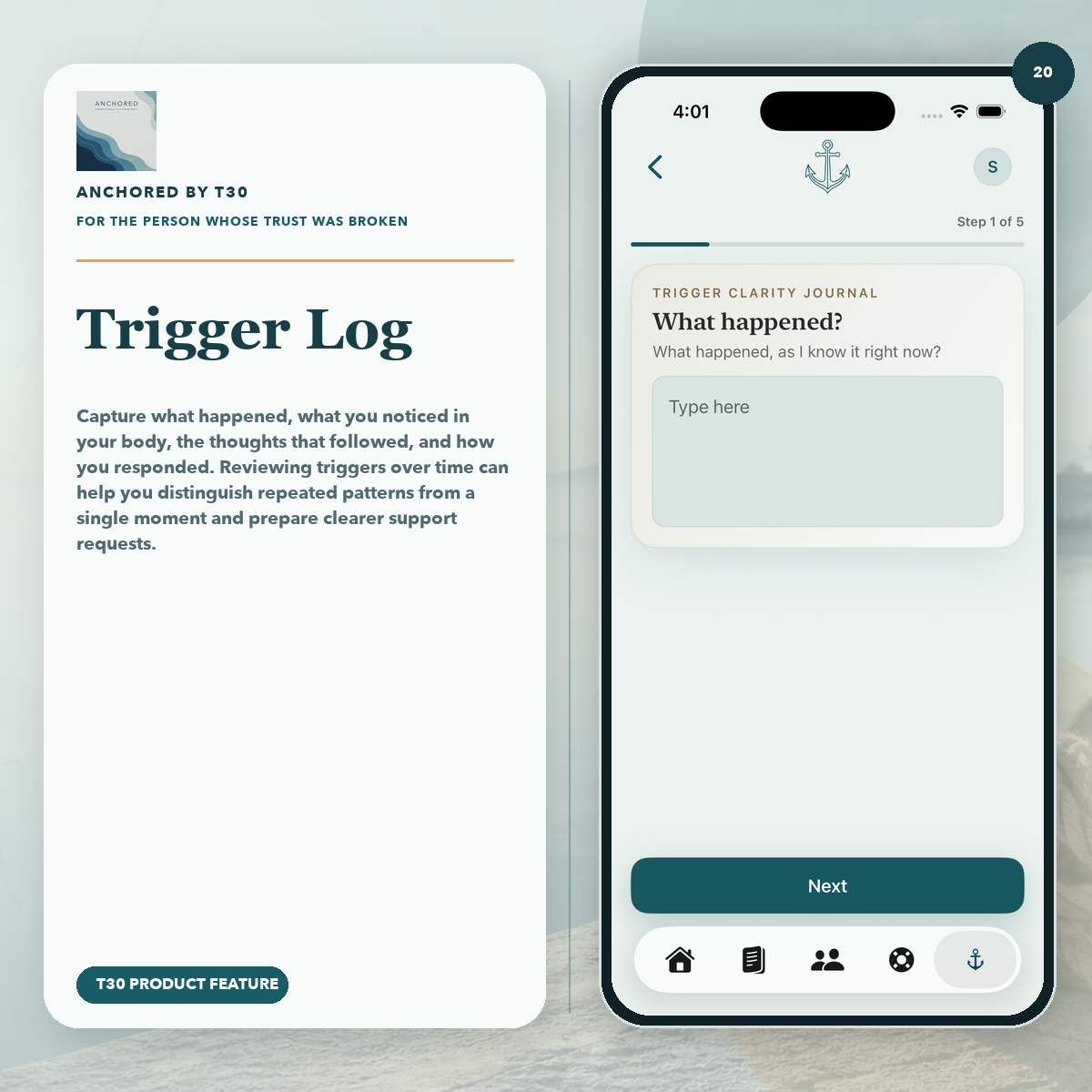
Trigger · Reaction · Context
Trigger Log
Capture what happened, what you noticed in your body, the thoughts that followed, and how you responded. Reviewing triggers over time can help you distinguish repeated patterns from a single moment and prepare clearer support requests.
Explore Trigger Log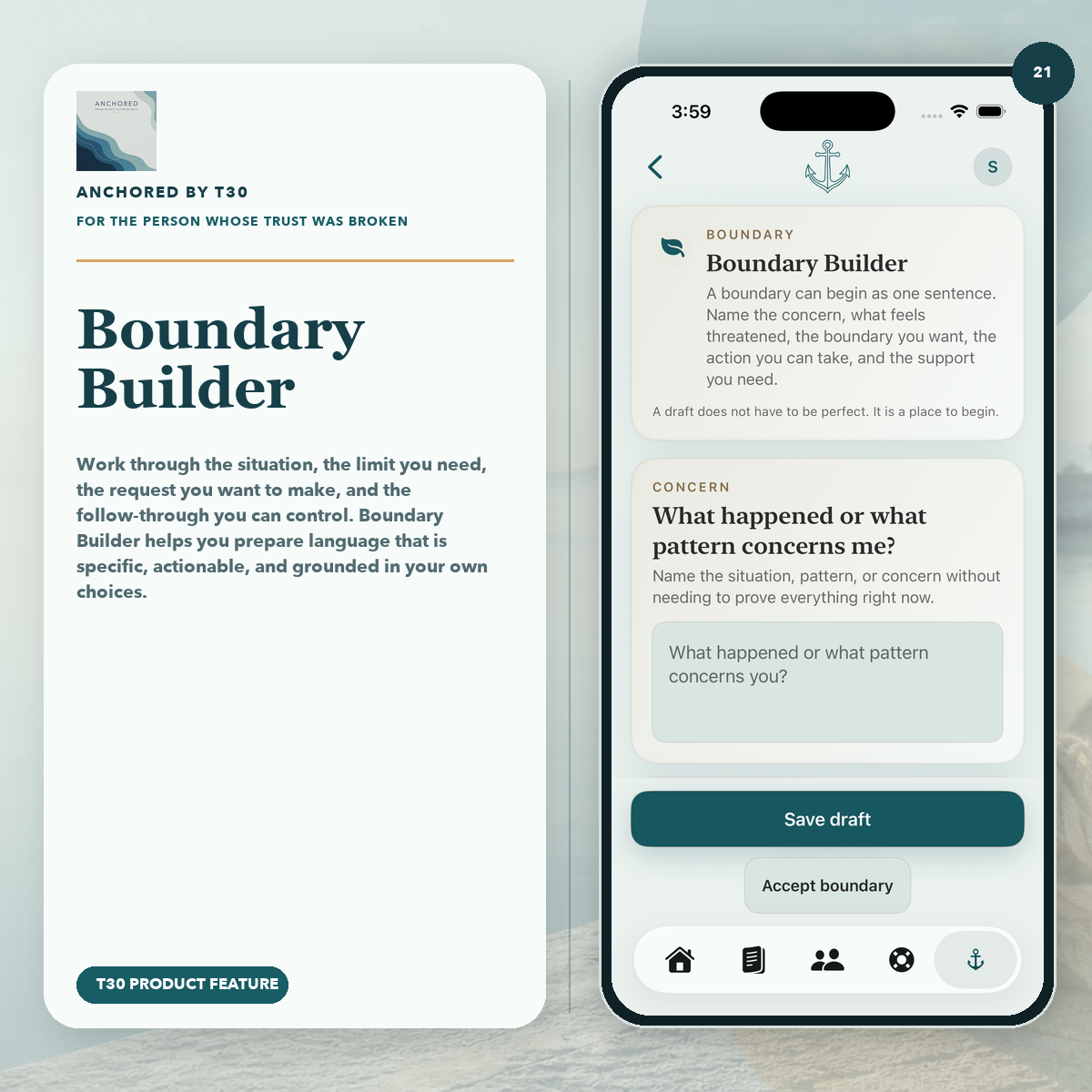
Situation · Limit · Follow-through
Boundary Builder
Work through the situation, the limit you need, the request you want to make, and the follow-through you can control. Boundary Builder helps you prepare language that is specific, actionable, and grounded in your own choices.
Explore Boundary Builder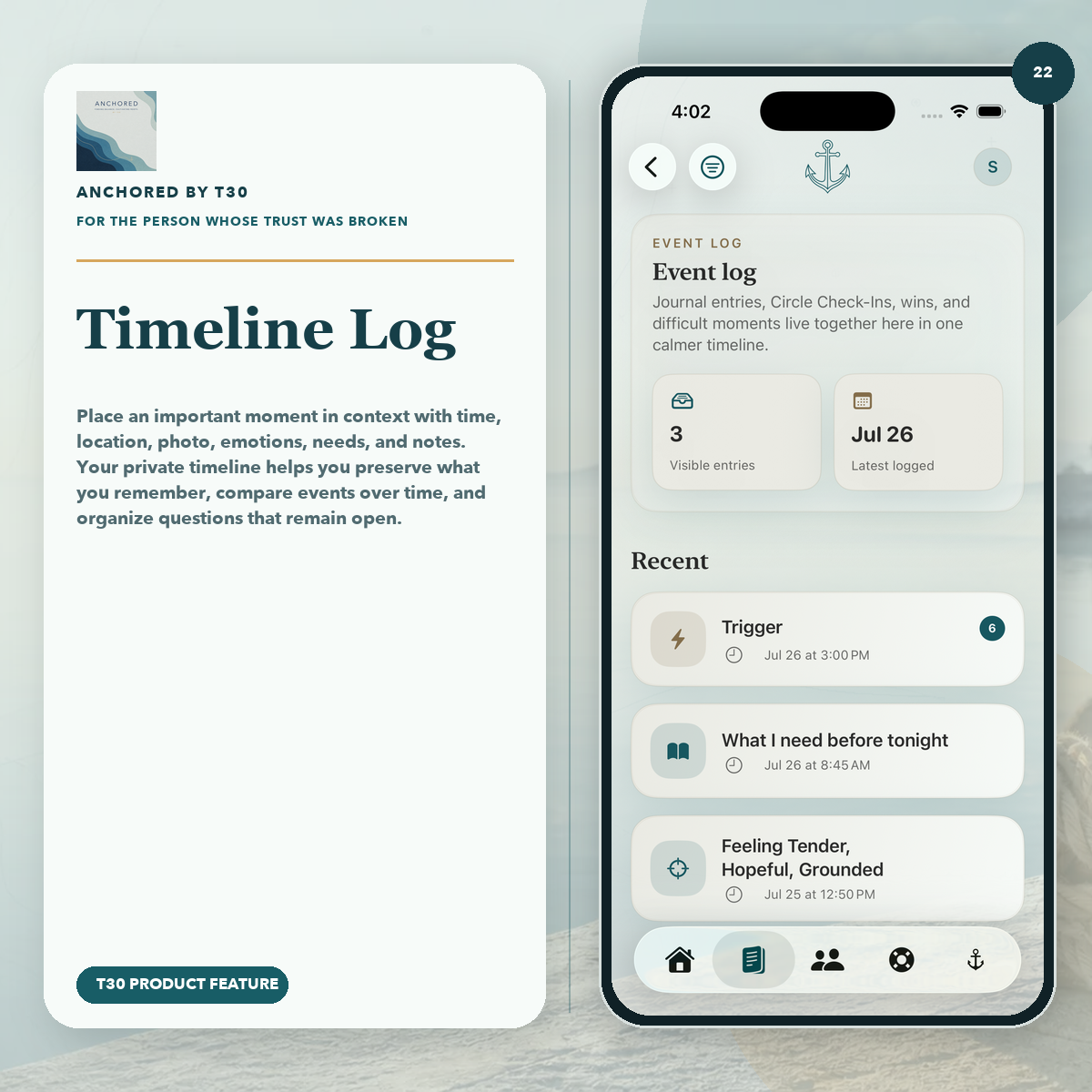
Important moments in context
Timeline Log
Place an important moment in context with time, location, photo, emotions, needs, and notes. The timeline helps you preserve what you remember, compare events over time, and organize questions that remain open.
Explore Timeline Log
Palette · Backdrop · Icon
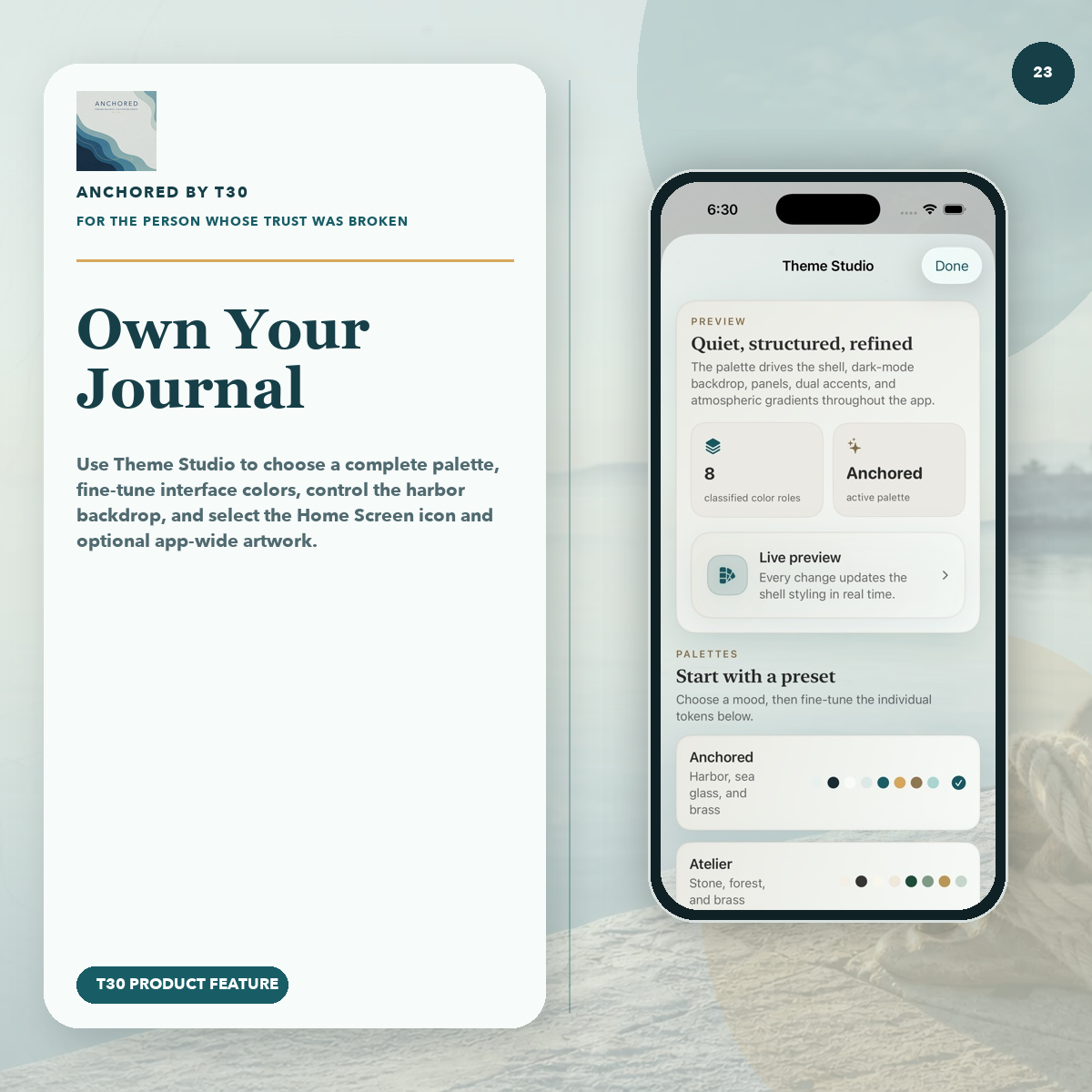
Own Your Journal
Use Theme Studio to choose a complete palette, fine-tune interface colors, control the harbor backdrop, and select the Home Screen icon and optional app-wide artwork.
Explore Theme Studio