
Insights for Self-Awareness and Trust Patterns
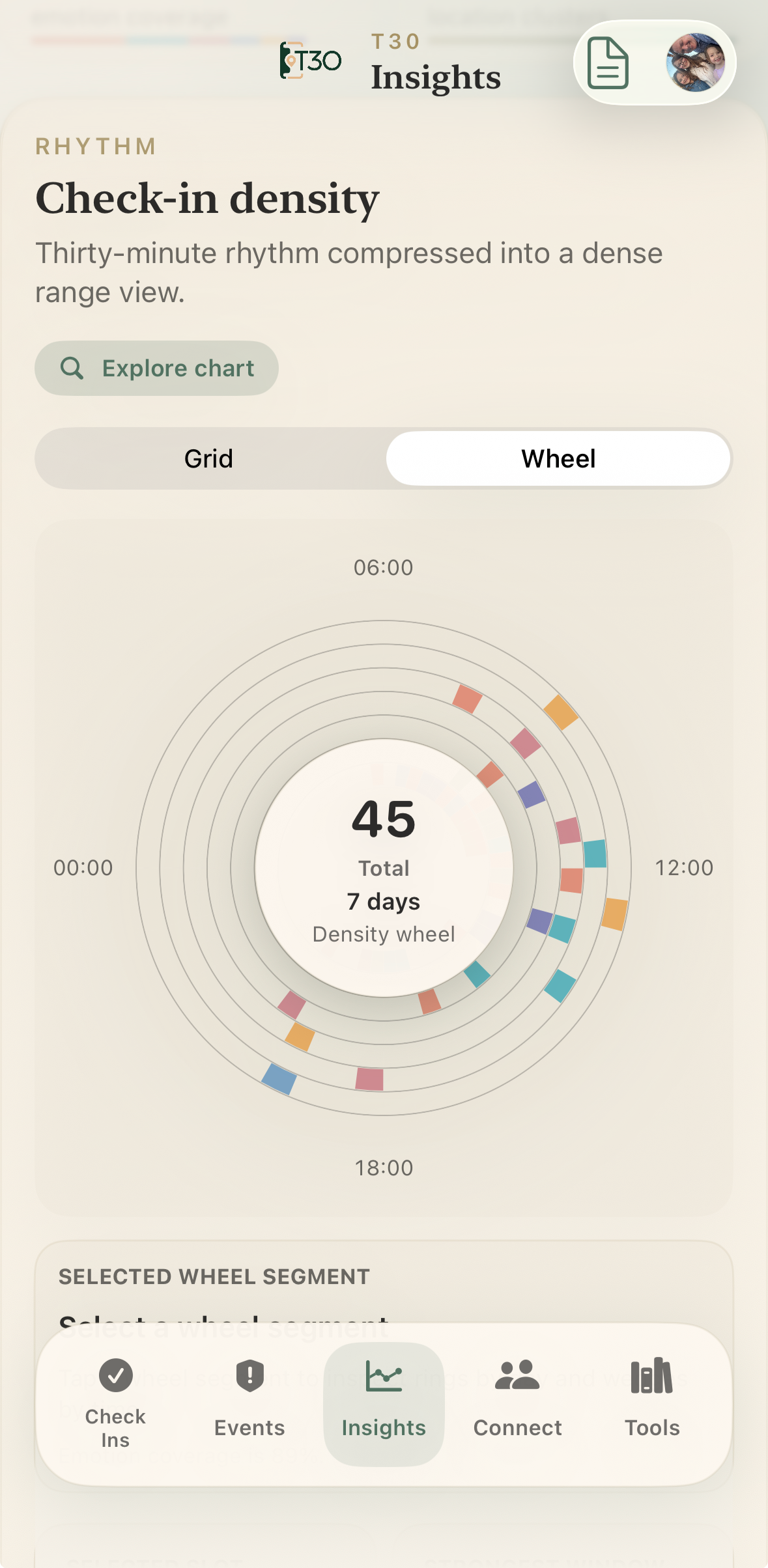
The T30 app calls this area Insights because the goal is pattern review, not data for its own sake. The user can look at rhythm, emotions, needs, events, context, and reports through a self-awareness lens.
Insights can help one person notice what keeps repeating in their private practice. When partner sharing is part of the agreement, the same patterns can become clearer relationship context without making every private entry partner-facing.
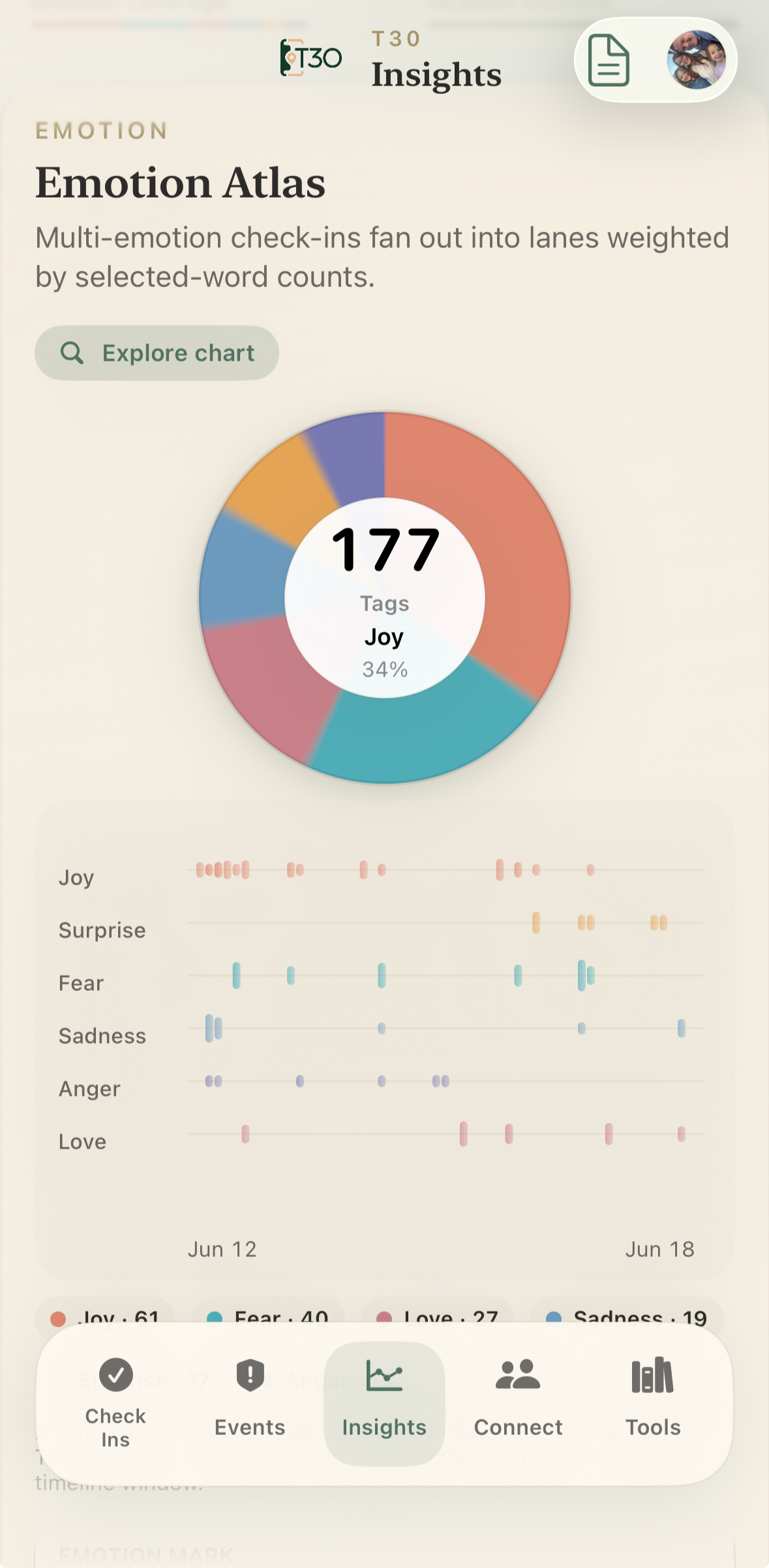
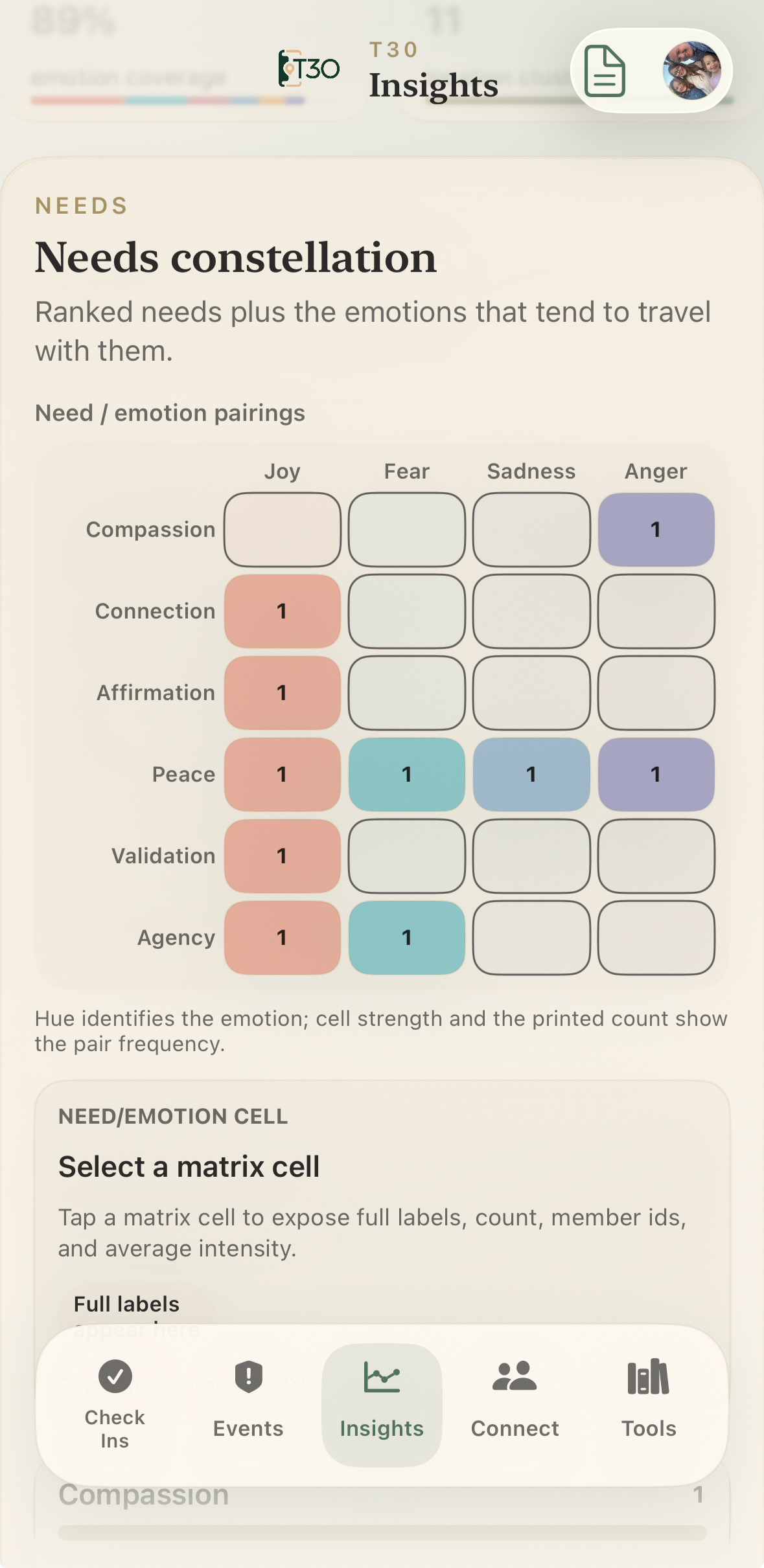
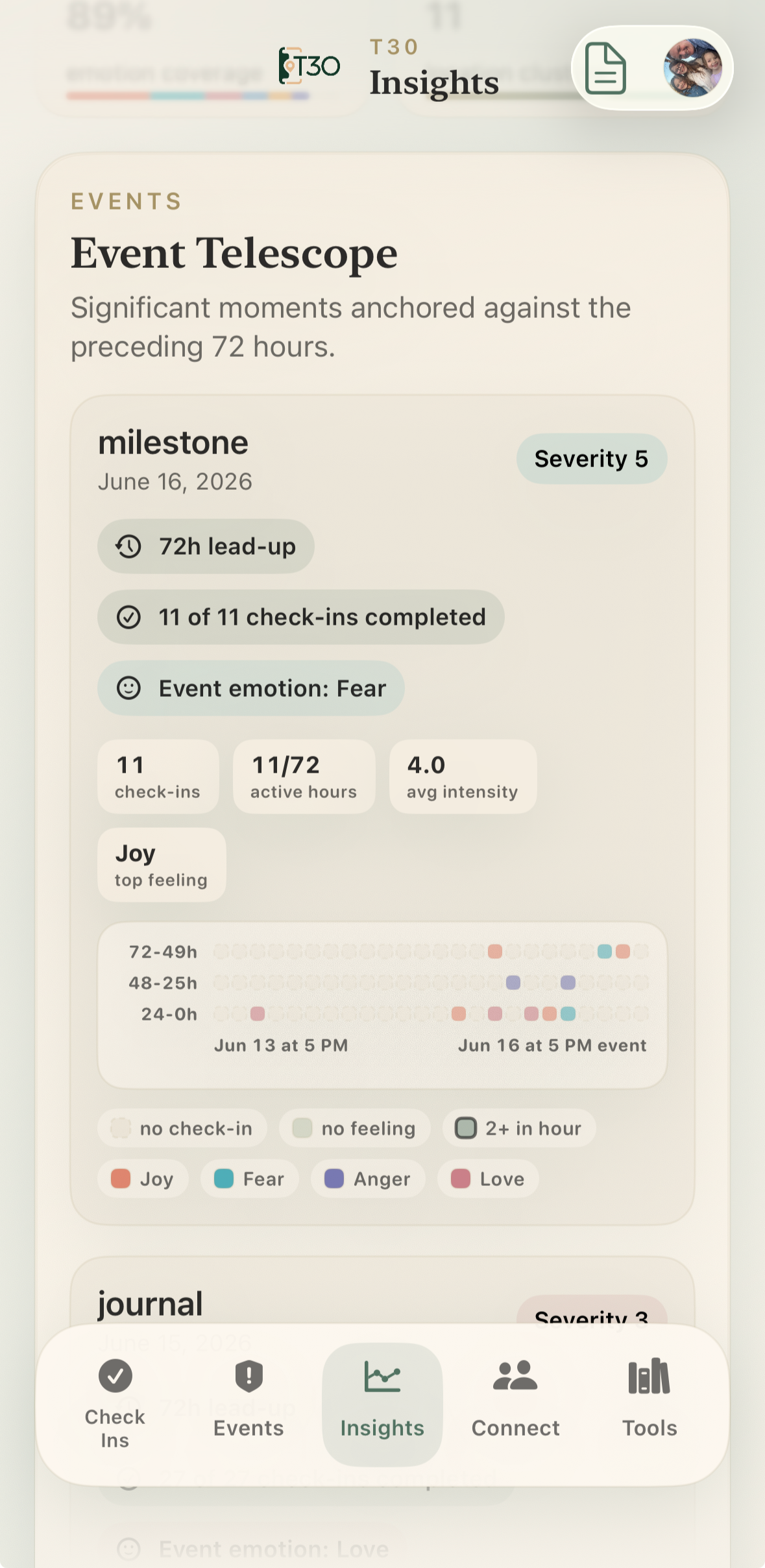
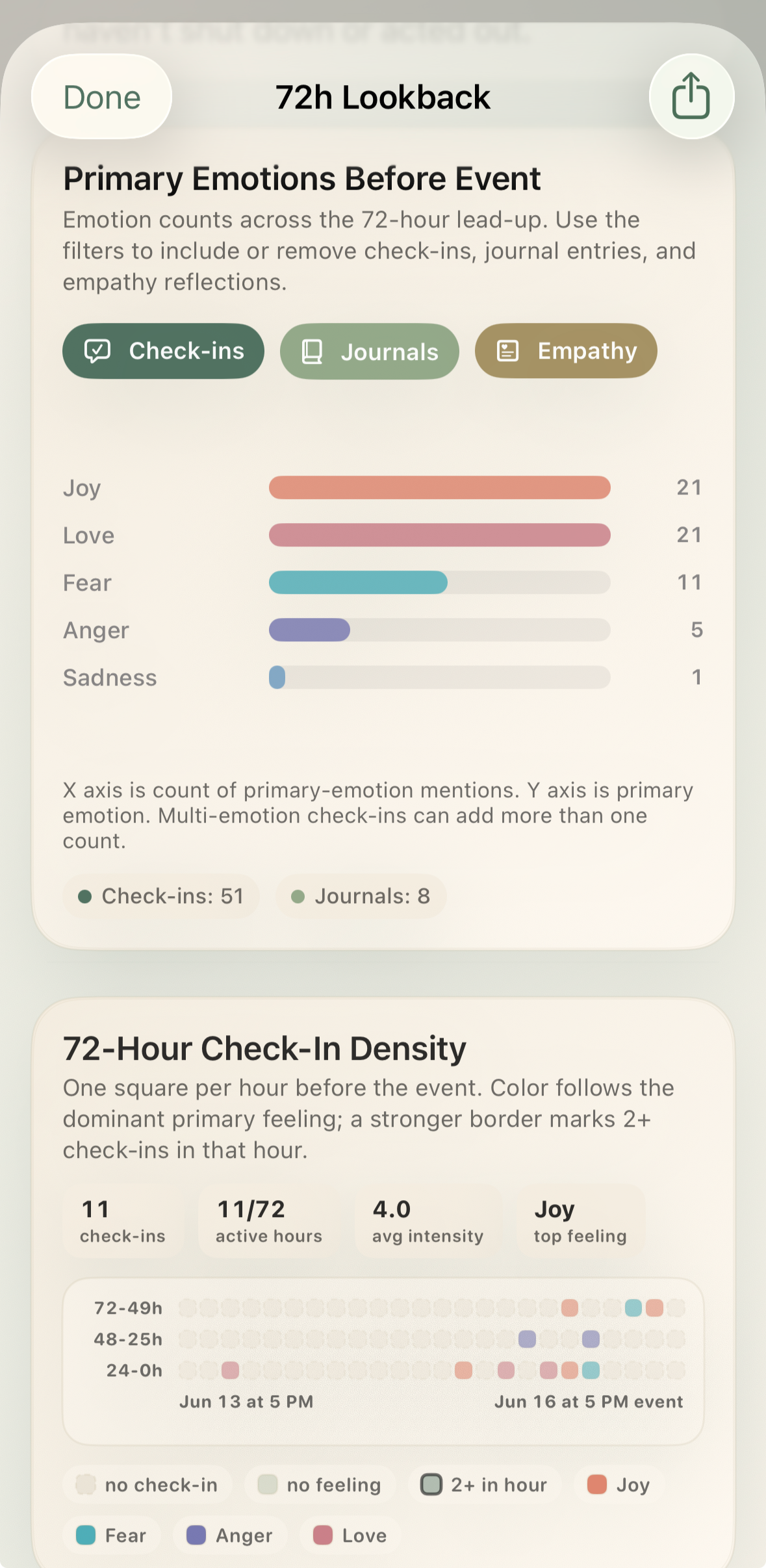
T30 Insights help users review check-in rhythm, emotions, needs, Significant Events, Daily Reports, and relationship patterns over time. They make repeated signals easier to notice, reflect on, and discuss when selected sharing helps.
What the Insights surface includes
Daily Report summaries for check-ins and relationship context.
Emotion and needs patterns across time.
Place or context patterns when that information is part of the user's chosen record.
Event Patterns for ruptures, repairs, wins, challenges, and milestones.
PDF or exportable summaries when the user chooses to share a narrow window.
T30 comparison
Insights vs reports
This feature should support the individual practice first: self-awareness, emotional clarity, ownership, reflection, and follow-through. It becomes partner-ready only through selected sharing when that helps the relationship.
| Question | Insights | Reports and exports |
|---|---|---|
| What keeps repeating? | Helps the user notice repeated emotions, needs, check-in rhythms, events, and context. | Can summarize a chosen day or window when a pattern needs to be reviewed. |
| What should stay private? | Supports private pattern recognition before the user decides what, if anything, should be shared. | Carries selected context only when sharing serves the agreement. |
| What needs a conversation? | Shows where the same need, emotion, missed rhythm, or Significant Event keeps returning. | Helps bring a narrower record into a partner conversation or personal review. |
Private practice first, selected sharing when it helps. T30 helps the individual notice, name, reflect, and follow through; partner context stays chosen, bounded, and specific.
How Insights help the individual
For the person using T30, Insights can make the private practice easier to understand. They can show when check-ins are steady, which emotions and needs keep returning, what contexts are tied to certain moods, and which events keep shaping the relationship.
That kind of pattern can support self-awareness, ownership, and follow-through. The point is not to score the person. The point is to notice what keeps happening and choose a more honest next step.
How Insights help the partner
A partner may need more than reassurance. When sharing is part of the agreement, Insights can help the user bring forward selected patterns instead of asking the partner to reconstruct everything from memory or worry.
The partner receives clearer context around what was logged, what events mattered, and what changed next, while private reflection remains private unless sharing is chosen and useful.
Patterns lead to choices
Insights are useful when they make the next choice clearer. They become less useful when every pattern turns into an accusation, defense, or verdict. Better questions are: what am I noticing, what needs attention, and what would help me act with more honesty or care?
A weekly repair conversation prompt
Once a week, the user can review T30 and choose one pattern they noticed, one action they followed through on, one place they still avoided ownership, and one thing they want to practice next.
A couple can keep the conversation bounded: what pattern mattered, what context is useful to share, what still feels unclear, and what changes next. The record should make repair easier to discuss without requiring every private journal entry to become partner-facing evidence.
When a couple uses T30 together, the partner can receive clearer context, records, and reports without being asked to manage every private thought or carry the whole process.