

Anchored by T30 · For the person whose trust was broken · Check-In Journal
Process the context you receive.
Review the Check-ins your partner chose to share, including time, activity, a verified-at-check-in location, camera-captured photo, emotions, needs, notes, and what was on their mind. Keep your own thoughts and feelings in your Anchored journal.
A proactive Check-in gives you more than a later verbal account. Review what was shared, then record your response separately before deciding what you want to ask or say.

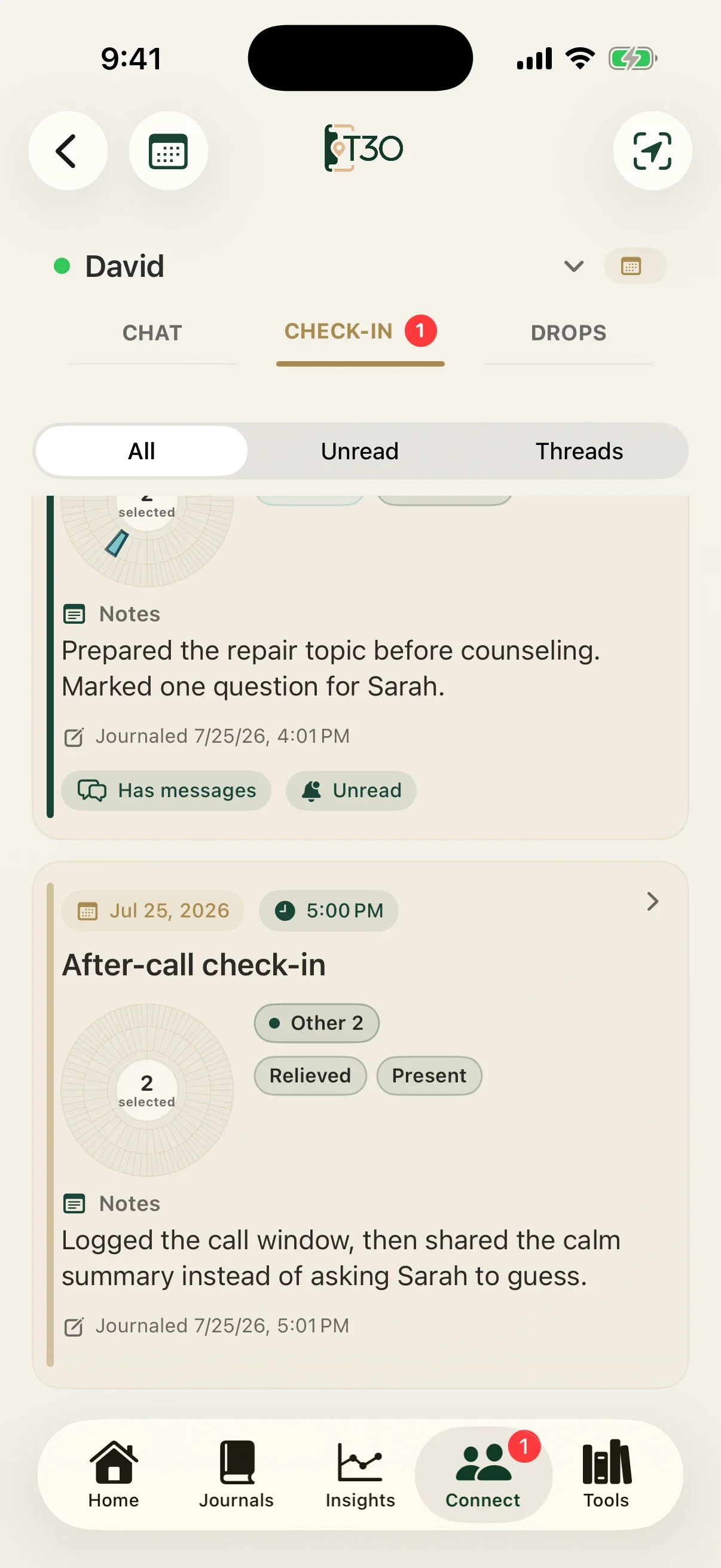
See the selected context.
Each shared check-in shows the details your partner selected and the time the check-in was made.
Keep your response separate.
Record your thoughts, feelings, questions, and needs in your own Anchored journal before you decide what to communicate.
Return to the record.
Review timing and selected details without relying only on memory or reconstructing the conversation later.
How shared Check-ins work
Review what was shared at that moment.
A shared Check-in is a time-stamped entry. It does not create a live location trail or show information your partner did not choose to include.
- 1 Review the entrySee the time and the activity, location, photo, emotions, needs, or notes that were shared.
- 2 Record your responseUse your own journal for thoughts, feelings, questions, and boundaries.
- 3 Choose what comes nextDecide whether you need conversation, clarification, time, or support.